⚡ Accredited Service

Gas
Calibration

Accurate, traceable calibration of portable gas detection instruments for Sarawak's oil and gas, manufacturing, and utility sectors. ISO/IEC 17025 accredited, SAMM No: 1249.
What We Calibrate

Gas Instruments
Calibration Services

ISO/IEC 17025 Accredited — SAMM No: 1249

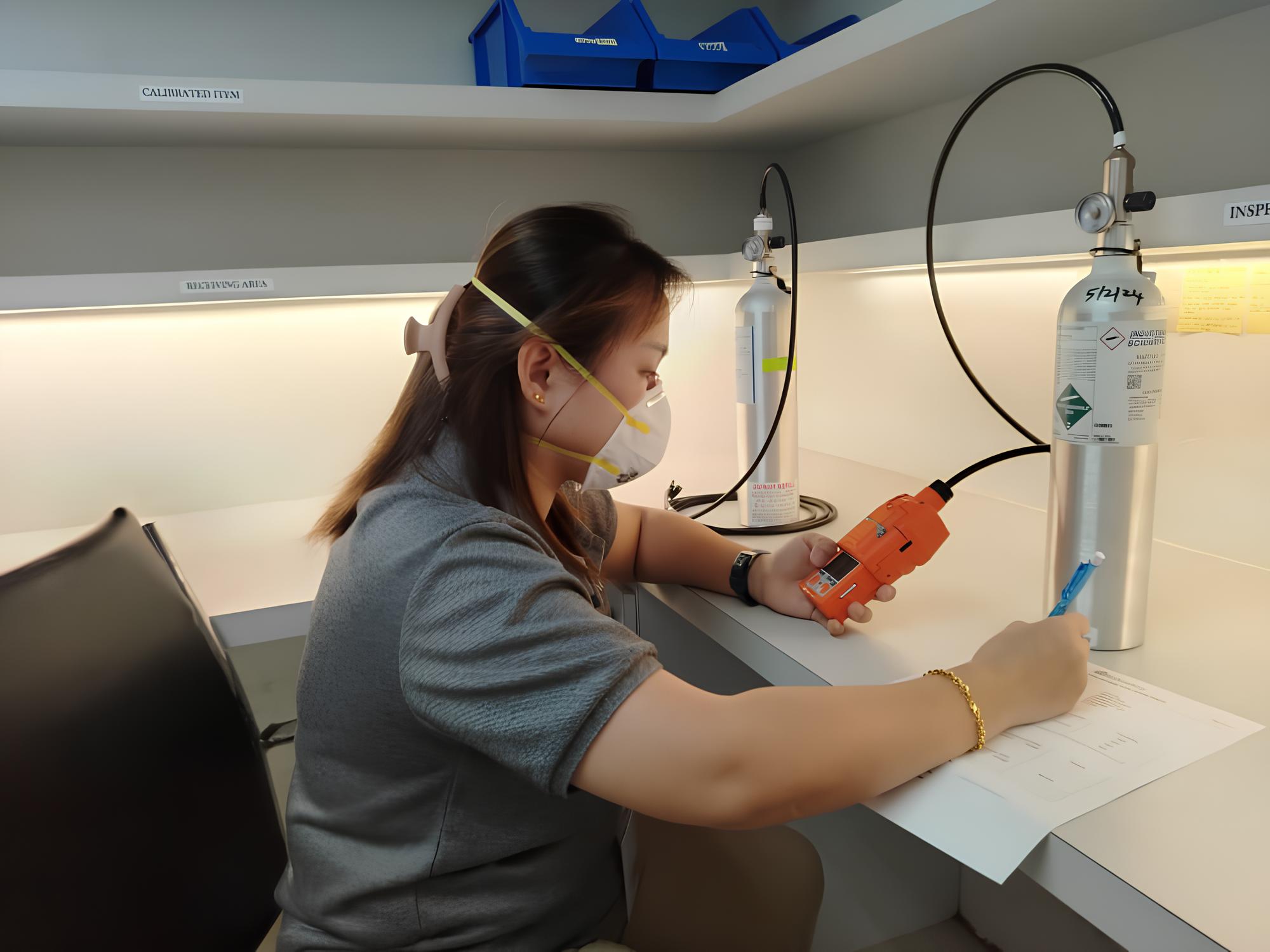
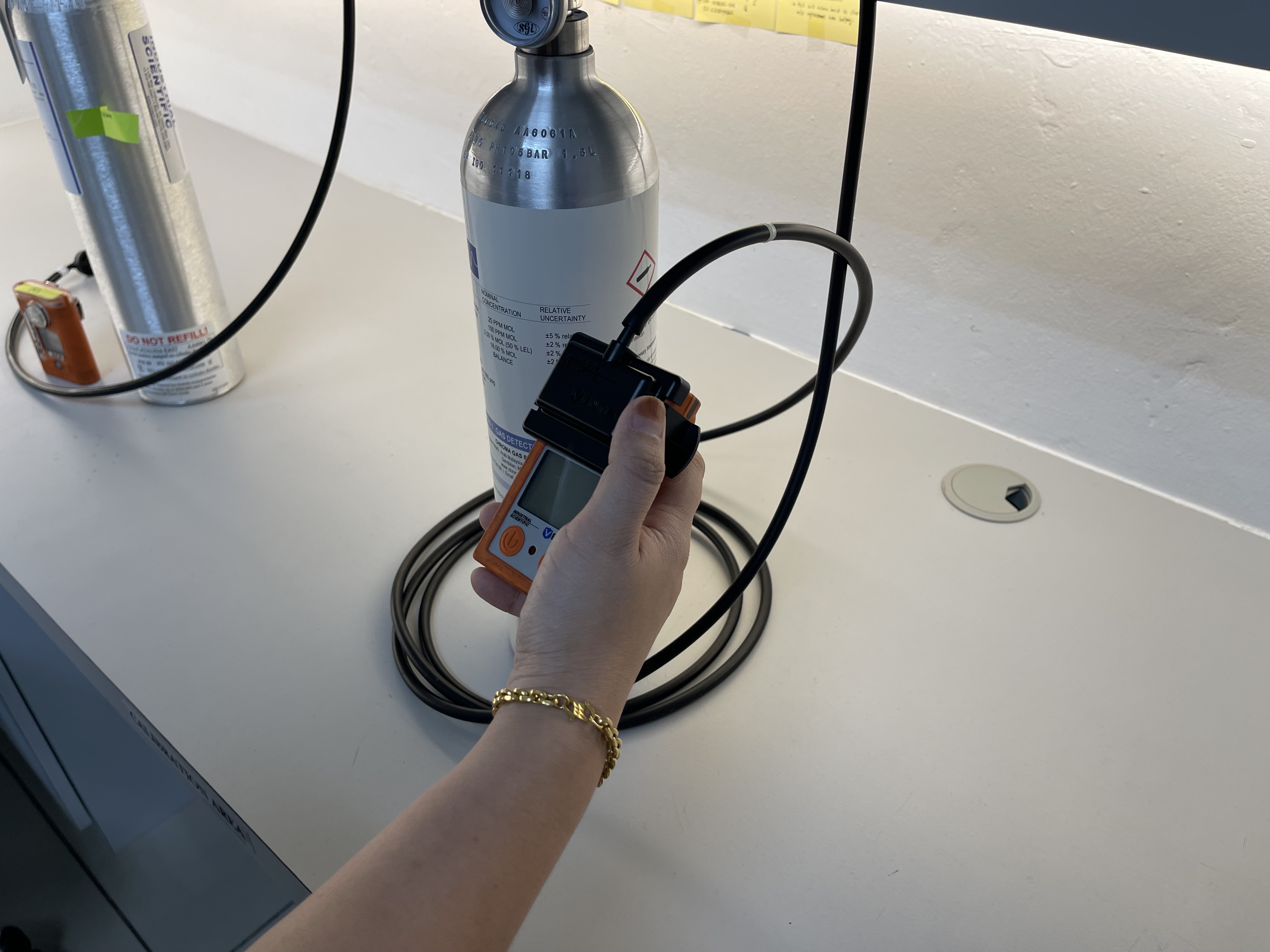
We provide gas calibration services for portable gas detection devices used in industrial safety and environmental monitoring. These detectors are essential for workplace safety in confined spaces, plant facilities, and oil & gas environments.

Over time, sensors in gas detectors can drift or degrade, leading to inaccurate readings. Regular calibration ensures your devices provide accurate measurements to detect hazardous gases and prevent accidents.

Type of Gas We Calibrate
Methane CH₄
CO (Carbon Monoxide)
H₂S (Hydrogen Sulfide)
O₂ (Oxygen) deficiency
Our Process

How Gas
Calibration Works

A straightforward, documented process from instrument drop-off to certified return.

1
Instrument Intake & Inspection
Instruments are received, logged with tag number and serial number, and visually inspected for physical damage, sensor expiration dates, and battery health before calibration begins.
2
As-Found Measurement & Bump Test
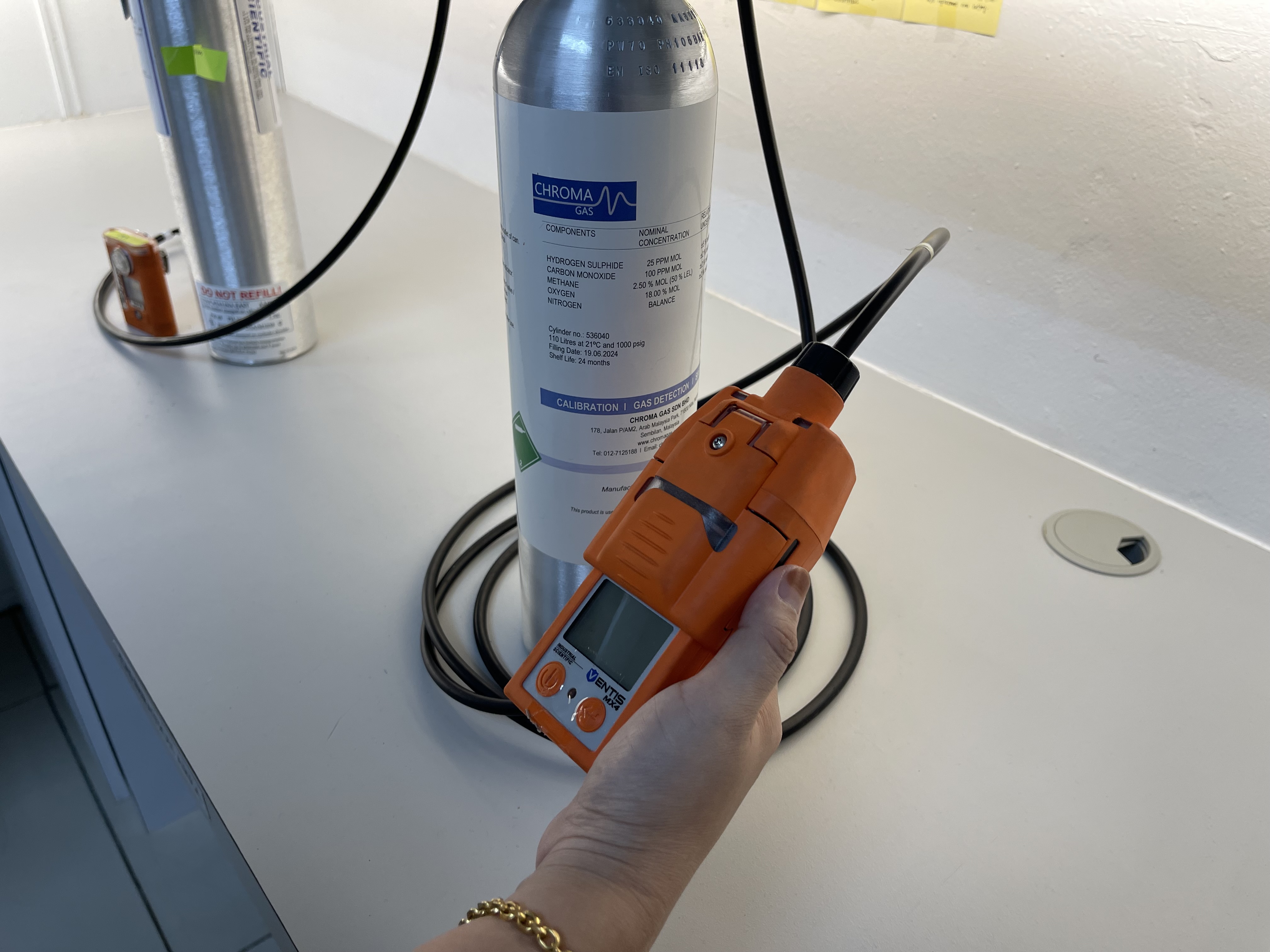
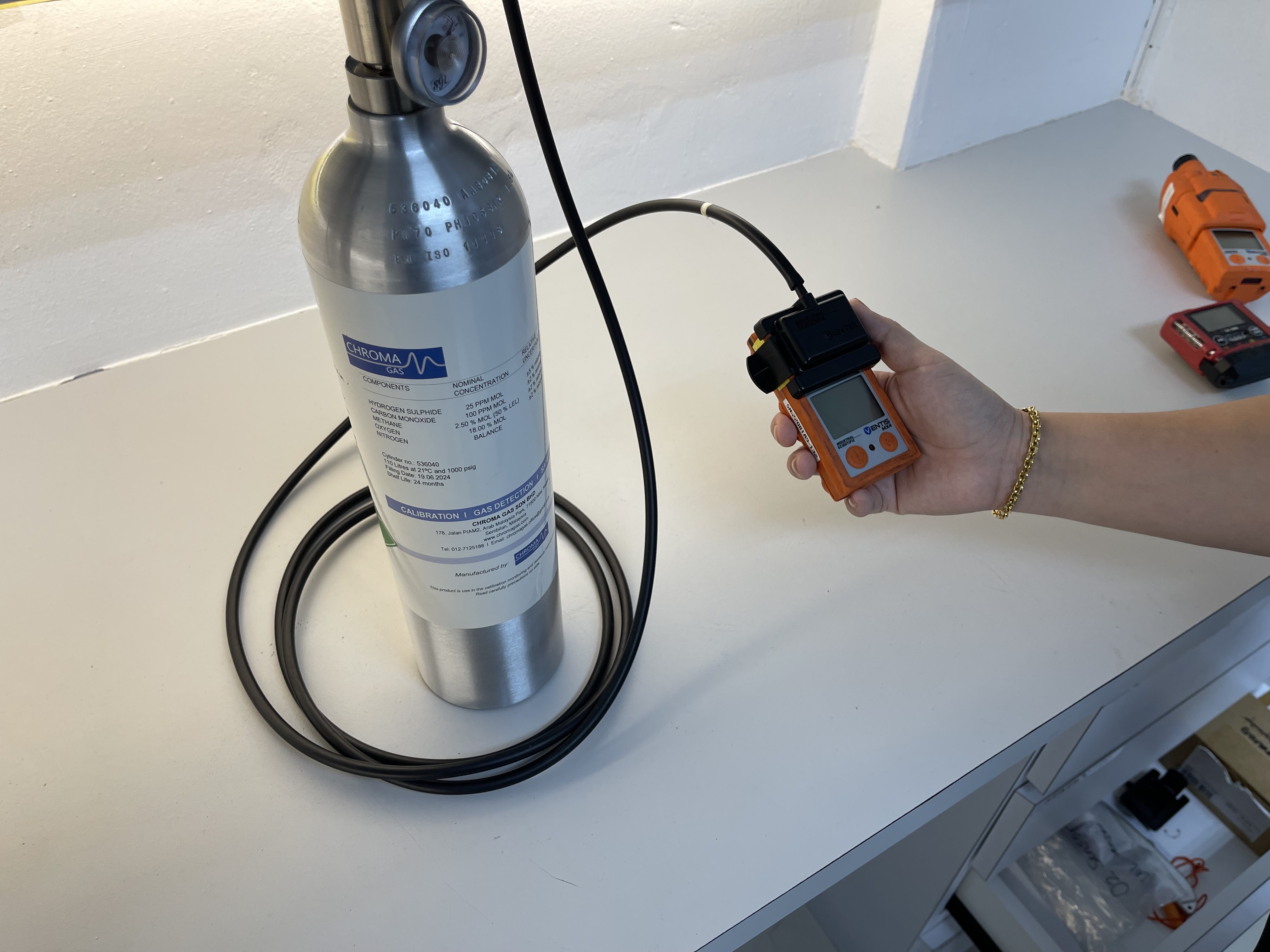
The instrument is exposed to a known concentration of certified reference standard gas. All initial "as-found" response readings and alarm triggers are recorded before any adjustment or sensor replacement is made.
3
Adjustment & Span Calibration (Zeroing & Spanning)
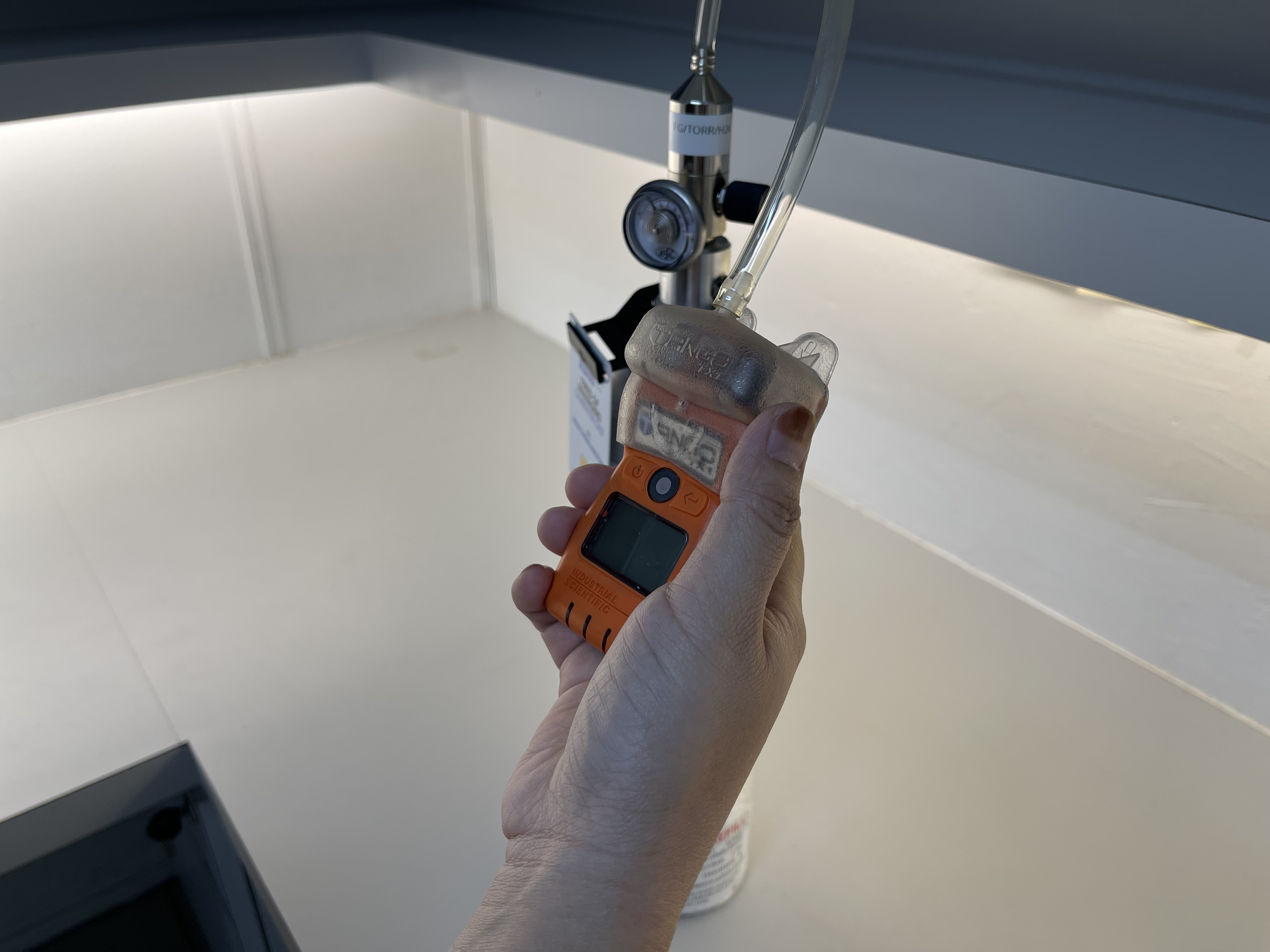
Technicians perform fresh air zeroing and span adjustments using precise gas flow regulators to bring the sensors back within strict manufacturer specifications and response times.
4
As-Left Measurement & Documentation
Final "as-left" readings are recorded to ensure accuracy across the full range. A comprehensive calibration certificate is generated, showing gas concentrations used, as-found/as-left data, sensor health trends, and traceability details.
5
Label & Return
Instruments are labeled with a calibration sticker detailing the calibration date, next due date, and technician signature, then returned with the certificate ready for your safety compliance records and audits.
Why It Matters

Sensors Drift.
Calibration Keeps You Safe.

Gas detectors that read incorrectly create safety risks, compliance failures, and operational downtime—especially in confined spaces and high-risk work areas.

🛡️
Safety Compliance
Operators and safety programs require calibration certificates as part of inspection and maintenance documentation for hazardous work environments.
🎯
Accurate Alarms
Drifted sensors can delay alarms or create false confidence. Regular calibration ensures response is within manufacturer specifications.
📋
Audit Readiness
Traceable certificates with as-found and as-left readings provide defensible evidence during audits, inspections, and safety reviews.
Ready to Calibrate Your Gas Instruments?
Send us your instrument list and we'll provide a quotation within 1 business day.
Submit a Request → 💬 WhatsApp Us